
The dust in Grandpa Arthur's attic didn't just sit; it hovered, suspended in the shafts of light that pierced through the circular window like golden spears. Silas coughed, the sound echoing against the stacks of yellowing newspapers and crates of forgotten clock parts. It had been three weeks since the funeral, three weeks of silence in the house that used to hum with the rhythmic ticking of a hundred timepieces. Now, the air felt heavy, stagnant, as if the house itself was holding its breath, waiting for a master who would never return.
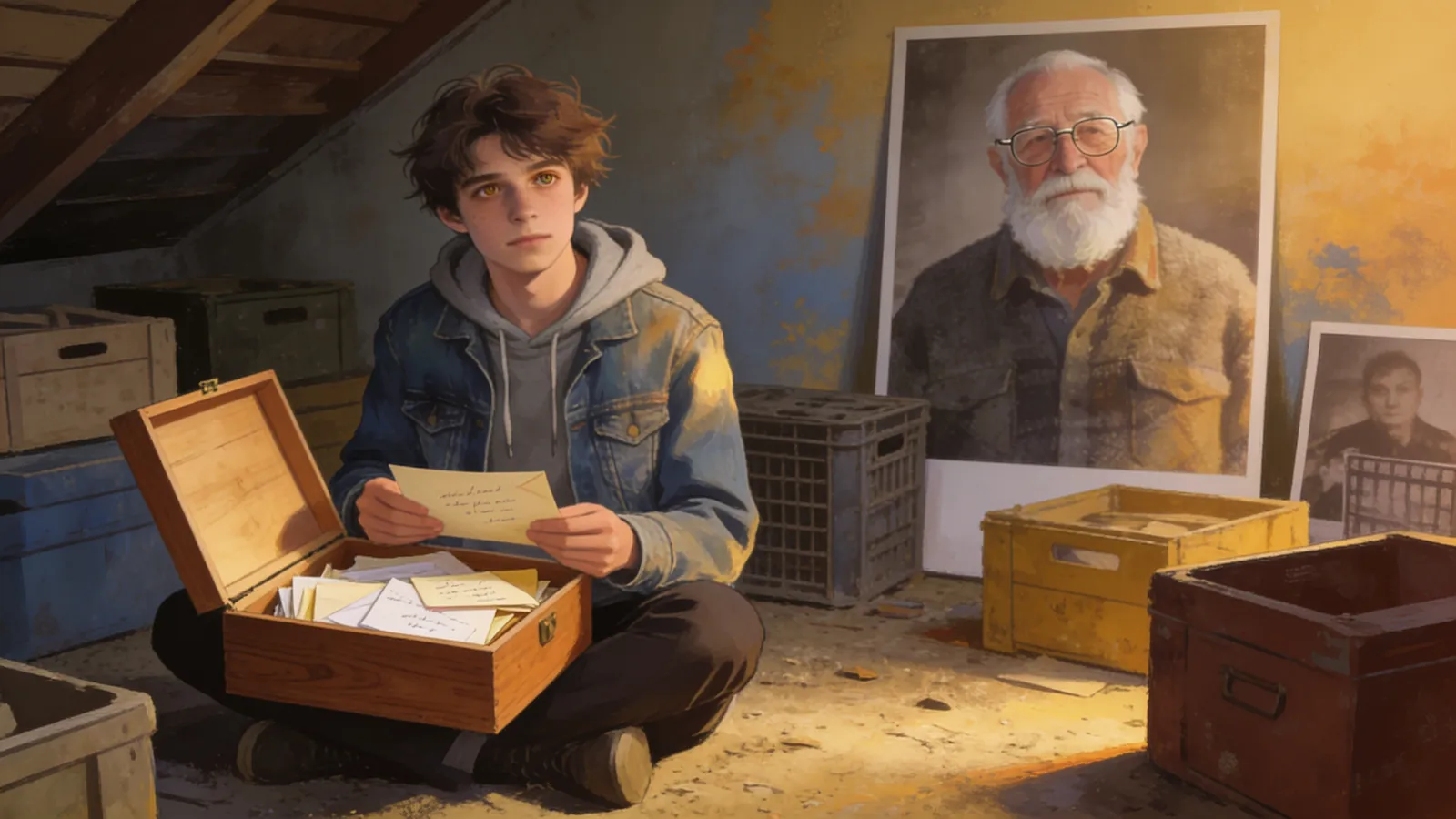
Silas moved a heavy trunk aside, his sneakers scuffing the floorboards. Behind a stack of moth-eaten blankets, he found it: a small, cedar-lined box with a brass latch that had turned green with age. He sat on the floor, his long legs cramped in the tight space, and clicked the latch open. Inside were dozens of envelopes, each one addressed in his grandfather's precise, looping cursive. They weren't bills or legal documents. They were apologies.
"To Mrs. Gable regarding the elm tree," he read aloud, his voice cracking slightly. He pulled another out. "To Mr. Henderson about the noise in 1994." There were dozens of them, spanning decades. Some were sealed, some were open, but none had ever been mailed. Silas felt a strange tightening in his chest. His grandfather had been known as the neighborhood hermit, the man who shouted at kids for crossing his lawn and kept his curtains drawn tight. To see this archive of regret was like finding a secret map to a man he realized he barely knew.
He pulled out a letter addressed to himself, tucked at the very bottom. His fingers trembled as he broke the seal. "Silas," it began, "I have spent my life building walls out of wood and silence. I hope you find the courage to tear yours down before the mortar sets." Silas leaned his head against the cold brick chimney, the paper crinkling in his hand. The weight of his own isolation, the way he had retreated into his headphones and his sketches since his parents' divorce, felt suddenly unbearable. He looked at the stack of letters. He couldn't bring his grandfather back, but he could finish what the old man had been too afraid to start.
The vintage Schwinn bicycle was a relic of a different era, its chrome fenders pitted with rust and its leather seat cracked like a dry riverbed. Silas wheeled it out of the garage, the chain protesting with a dry, metallic squeak. He spent the morning oiling the gears and pumping air into the tires until they were firm. He strapped a leather satchel to the rear rack, carefully tucking the first batch of letters inside. The neighborhood of Echo Ridge stretched out before him, a grid of manicured lawns and identical fences that felt more like barricades than boundaries.
His first stop was three houses down, the residence of Mrs. Gable. She was a woman Silas only knew as a silhouette behind sheer curtains, a person his grandfather had once described as a nuisance. The letter in his pocket suggested otherwise. According to Arthur's shaky script, he had accidentally cut down a flowering dogwood that marked the boundary of their properties forty years ago and had never admitted it, letting the resentment fester into a lifelong feud.
Silas stood at the base of her porch steps, his heart hammering against his ribs. Why did this feel so much like a heist in reverse? He reached out and pressed the doorbell. The chime was faint, followed by the muffled sound of shuffling feet. When the door opened, a small woman with hair like spun sugar peered out through the screen. Her eyes were sharp, suspicious, guarded by years of solitude.
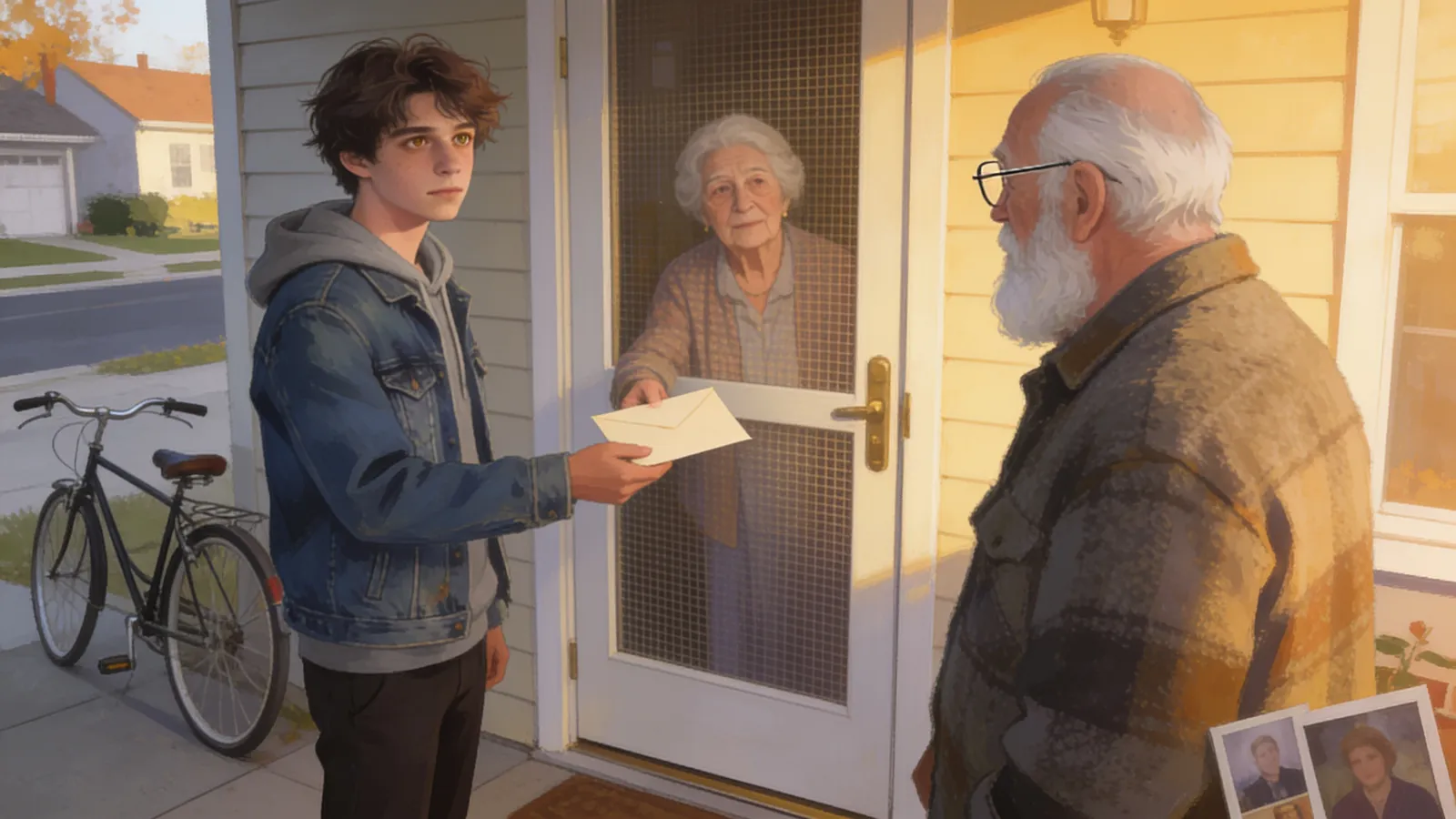
"What is it?" she asked, her voice thin but firm. Silas reached into his bag, his palms sweating. "I'm Silas, Arthur's grandson. I found this in his things. It's for you." He handed the envelope through the gap in the door. Mrs. Gable stared at the handwriting, her expression shifting from annoyance to a profound, quiet shock. She didn't open it immediately. Instead, she looked at Silas, really looked at him, seeing the resemblance in his brow and the set of his jaw. "He kept this?" she whispered. Silas nodded, unable to find his voice, and watched as the first crack appeared in the wall between their houses.
The second delivery took Silas to the edge of the cul-de-sac, where Mr. Henderson lived. Henderson was a man of immense proportions, a retired longshoreman with hands the size of dinner plates and a voice that sounded like gravel in a blender. Silas remembered his grandfather complaining about Henderson's loud music, but the letter told a different story. It was an apology for a series of noise complaints Arthur had filed with the city, not because the music was loud, but because the songs reminded him of his late wife, and he couldn't bear to hear them.
As Silas approached, he saw Henderson working on a classic car in his driveway, his torso submerged under the hood. The smell of oil and old gasoline hung heavy in the air. Silas cleared his throat, but the clank of a wrench drowned him out. He waited, shifting his weight from one foot to the other, feeling the eyes of the neighborhood on him. Finally, Henderson emerged, wiping his greasy hands on a rag that was more black than white.
"You're the kid from the clock house," Henderson grunted, squinting in the afternoon sun. "Grandpa finally kick the bucket?" It was a blunt way to put it, and Silas felt a flash of anger, but he pushed it down. He held out the letter. "He wanted you to have this. It's about the music." Henderson took the envelope gingerly, as if it might explode. He read it standing there in the driveway, the shadow of the car stretching long across the pavement.

To Silas's surprise, the big man's shoulders slumped. He let out a long, shuddering breath and leaned against the fender. "I thought he just hated me," Henderson said softly. "I played those records louder just to spite him. I didn't know he was hurting too." He looked up at Silas, his eyes glassy. "You want to see the engine? It's a '67 Mustang. Your granddad used to watch me work on it from his window. I always thought he was judging my timing, but maybe he just wanted to talk." Silas stepped closer, the barrier of the driveway finally crossed, and for the next hour, they spoke not of regrets, but of pistons and spark plugs.
By the third day, the mission had taken on a life of its own. Silas found himself waking up early, eager to see whose story he would uncover next. The satchel was lighter, but his heart felt strangely heavier, filled with the collective weight of a dozen lives he had ignored for seventeen years. He realized that the neighborhood wasn't just a collection of houses; it was a graveyard of unspoken words. Every fence was a monument to a misunderstanding, every locked door a testament to pride.
He pedaled toward the park, where the next recipient, a younger woman named Elena, was known to sit by the duck pond. The letter for her was different; it wasn't about a property dispute or a noise complaint. It was an apology for a harsh word Arthur had said to her when she was a child, a moment where he had yelled at her for picking flowers from his garden. Arthur had written that he had seen his own daughter's face in hers and had lashed out in a moment of grief he couldn't control.
Silas found Elena sitting on a bench, a sketchbook in her lap. She looked up as he approached, her dark curls bouncing. When he explained who he was and handed her the letter, she didn't seem angry. She read it and smiled sadly. "I remember that day," she said. "I cried for hours. I thought I was a bad kid. I've lived in this neighborhood for twenty years, Silas, and I've always walked on the other side of the street when I passed your house."
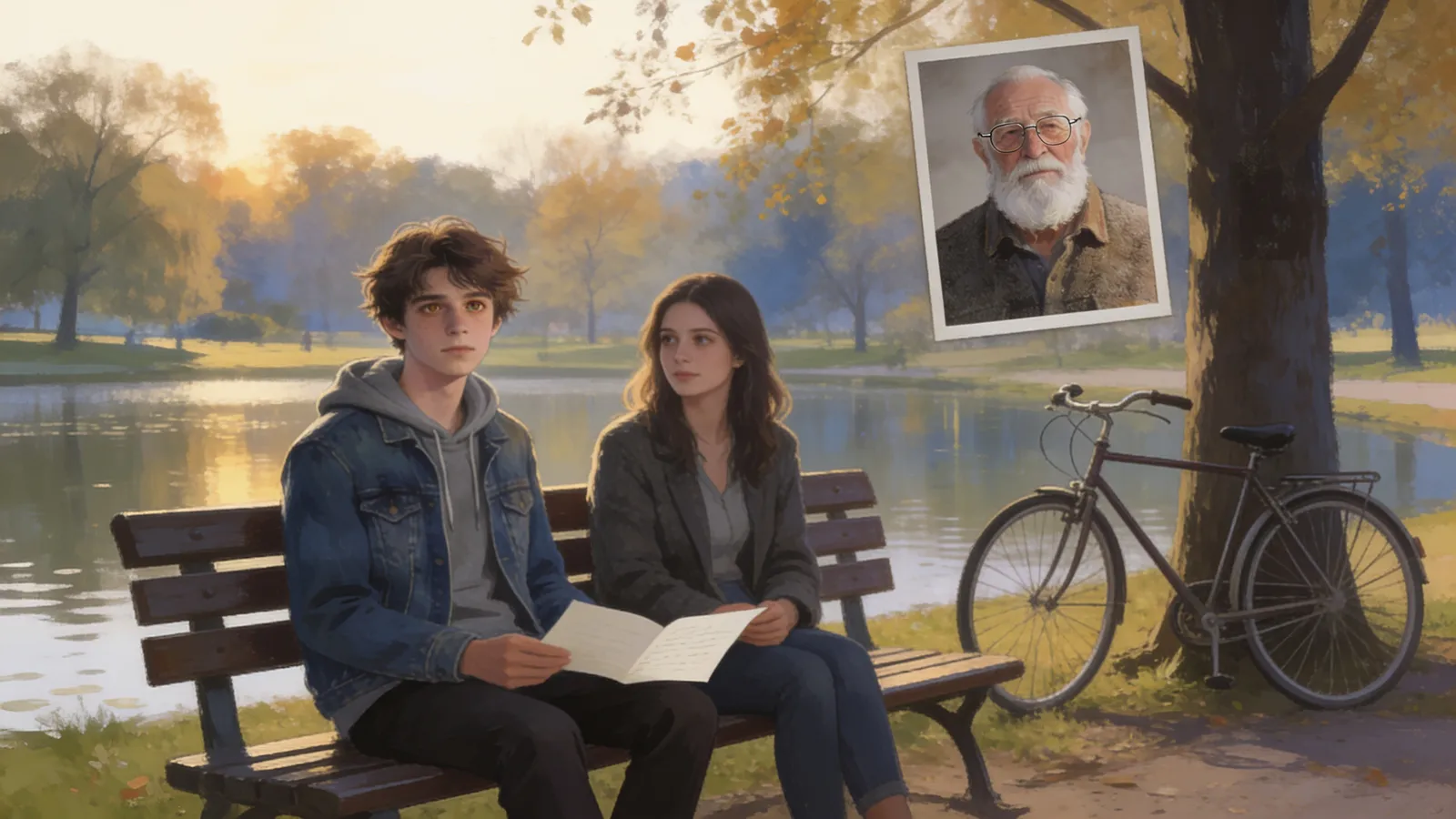
She invited him to sit. They talked about the garden, about how Silas was now the one tending to the overgrown roses. "It's funny," Elena said, sketching a quick charcoal line on her page. "We spend so much time protecting our little patches of dirt, but we forget that the dirt is all connected underneath. Your grandfather was a lonely man, Silas. Don't let that be your inheritance." Silas looked at his hands, stained with bicycle grease and ink, and realized that the letters were doing more than healing the neighbors. They were rewriting his own future.
The weather turned on the fifth day, a grey drizzle coating the streets in a slick sheen. Silas didn't care. He pulled his hood up and kept pedaling. The letters were becoming more difficult now, addressing deeper wounds. He had one for the Miller family, whose son had been his age before moving away. The letter apologized for Arthur never returning a borrowed ladder, a trivial thing that had somehow ended a twenty-year friendship between the two men.
When Silas arrived, the Miller house was quiet, the lawn overgrown. It reminded him of his own home. He knocked, and when Mr. Miller answered, the man looked tired, his eyes weary from a life of hard work and quiet disappointments. Silas handed over the letter, explaining the situation. Mr. Miller didn't say much, but he invited Silas in for a cup of tea. The kitchen smelled of cinnamon and old wood.
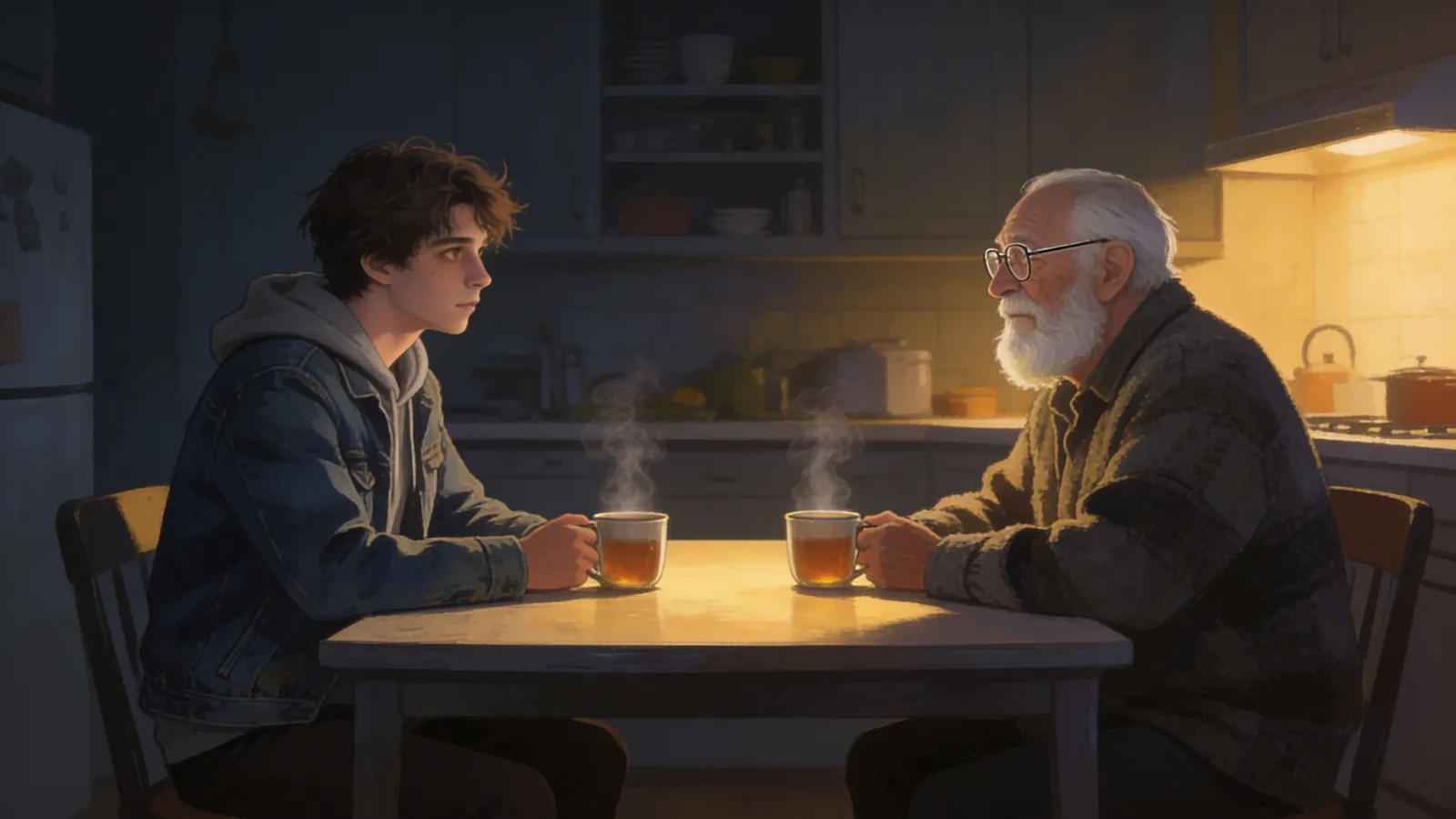
"Arthur was a stubborn mule," Miller said, stirring his tea with a rhythmic clink. "But he was a good craftsman. He helped me build the deck out back, you know. Then the ladder thing happened, and we both just... stopped. It's ridiculous, isn't it? How a piece of aluminum can stand between two men?" He laughed, a dry, hollow sound that filled the small kitchen. "I missed him, Silas. I saw the ambulance three weeks ago and I wanted to come over, but I didn't think I was welcome."
Silas felt a lump in his throat. "He wanted to say he was sorry. He just didn't know how to say it out loud." They sat in silence for a while, the rain tapping against the windowpane. Silas realized that his grandfather's reclusiveness wasn't a choice made out of hatred, but out of a paralyzing fear of rejection. Every letter was a bridge Arthur had built in his mind but had been too terrified to cross. As Silas left, Mr. Miller followed him to the door and shook his hand, a firm, calloused grip that felt like a blessing.
The most difficult letter was addressed to a woman named Clara, who lived in a small cottage at the very end of the ridge. The envelope was thicker than the others, the paper yellowed with age. As Silas pedaled, he thought about the way his grandfather used to stare out at the sunset from the porch, his eyes fixed on the horizon toward the end of the road. He had always assumed Arthur was just watching the light fade, but now he wondered if he was looking for someone.
Clara was working in her garden when he arrived, her knees in the dirt despite the damp weather. She wore a wide-brimmed straw hat that hid her face. When Silas called out to her, she stood up slowly, wiping her hands on her apron. When he told her his name, she froze. Her eyes, a startling blue, searched his face with an intensity that made him want to look away.
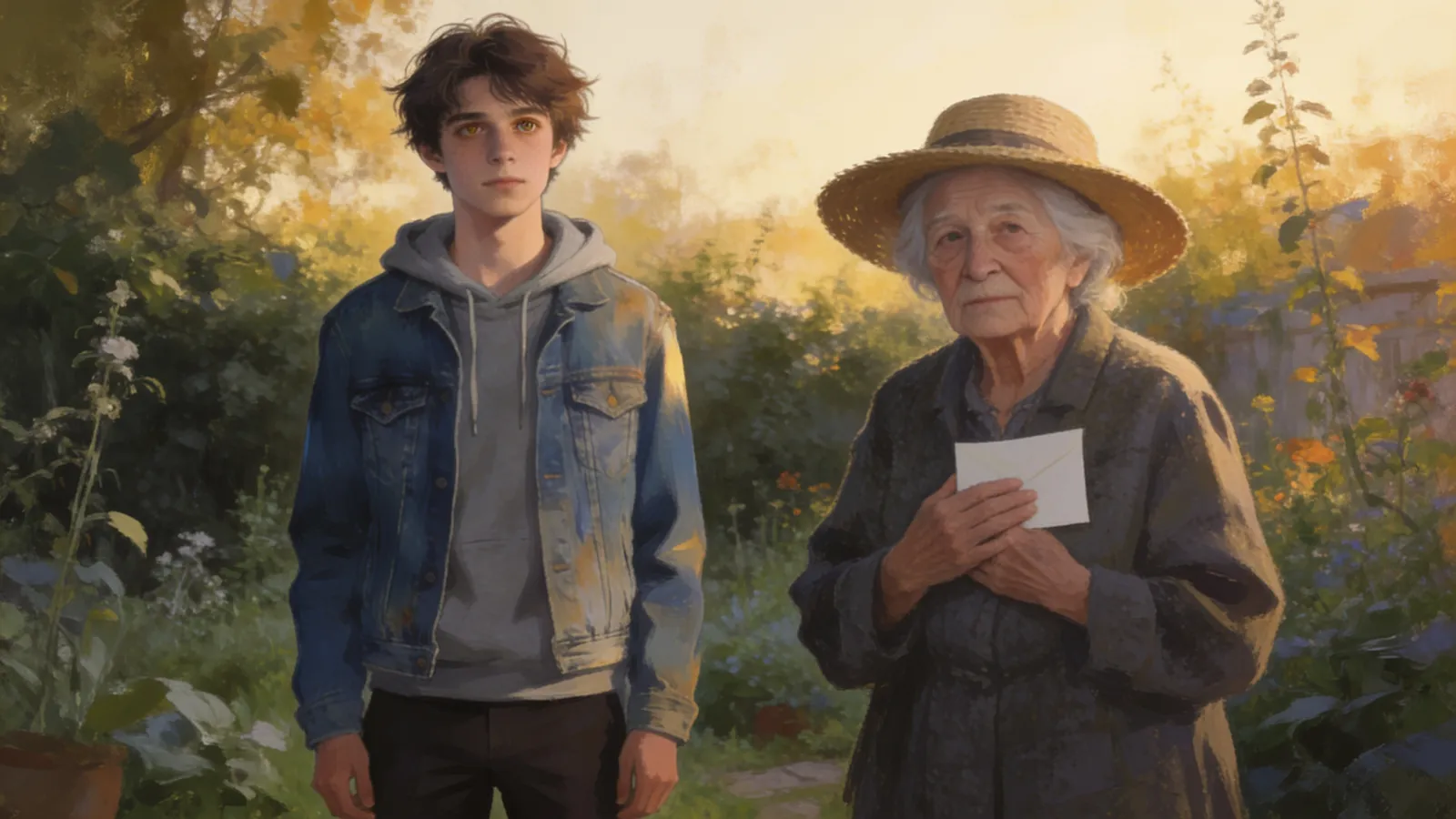
"You have his eyes," she said, her voice a melodic rasp. Silas handed her the letter. She didn't open it. She held it to her chest, her eyes closing. "I waited forty years for this," she whispered. Silas stood awkwardly, not knowing what to say. "Were you... friends?" he asked. Clara smiled, a beautiful, tragic expression. "We were more than that, once. But your grandfather had a way of retreating when things got real. He thought he wasn't enough for anyone. He pushed me away to save me from himself."
She finally opened the letter and read it in silence, the only sound the rustle of the wind through the nearby oaks. When she finished, she looked at Silas and touched his cheek with a dirt-smudged hand. "He loved you very much, Silas. He wrote about you in every letter he never sent me. He was so proud of the boy you were becoming, even if he didn't know how to tell you." Silas felt the first tear track through the dust on his face. The letters weren't just for the neighbors. They were a breadcrumb trail leading him back to the man he had lived with but never truly known.
Word of Silas's deliveries began to spread through Echo Ridge. The neighborhood, once a collection of isolated islands, was starting to feel like a community again. People started nodding to him as he rode by. Mrs. Gable left a plate of cookies on her porch for him. Mr. Henderson waved from his garage, the Mustang now purring with a tuned engine. Even the air seemed lighter, as if the collective exhaling of long-held secrets had cleared the suburban smog.
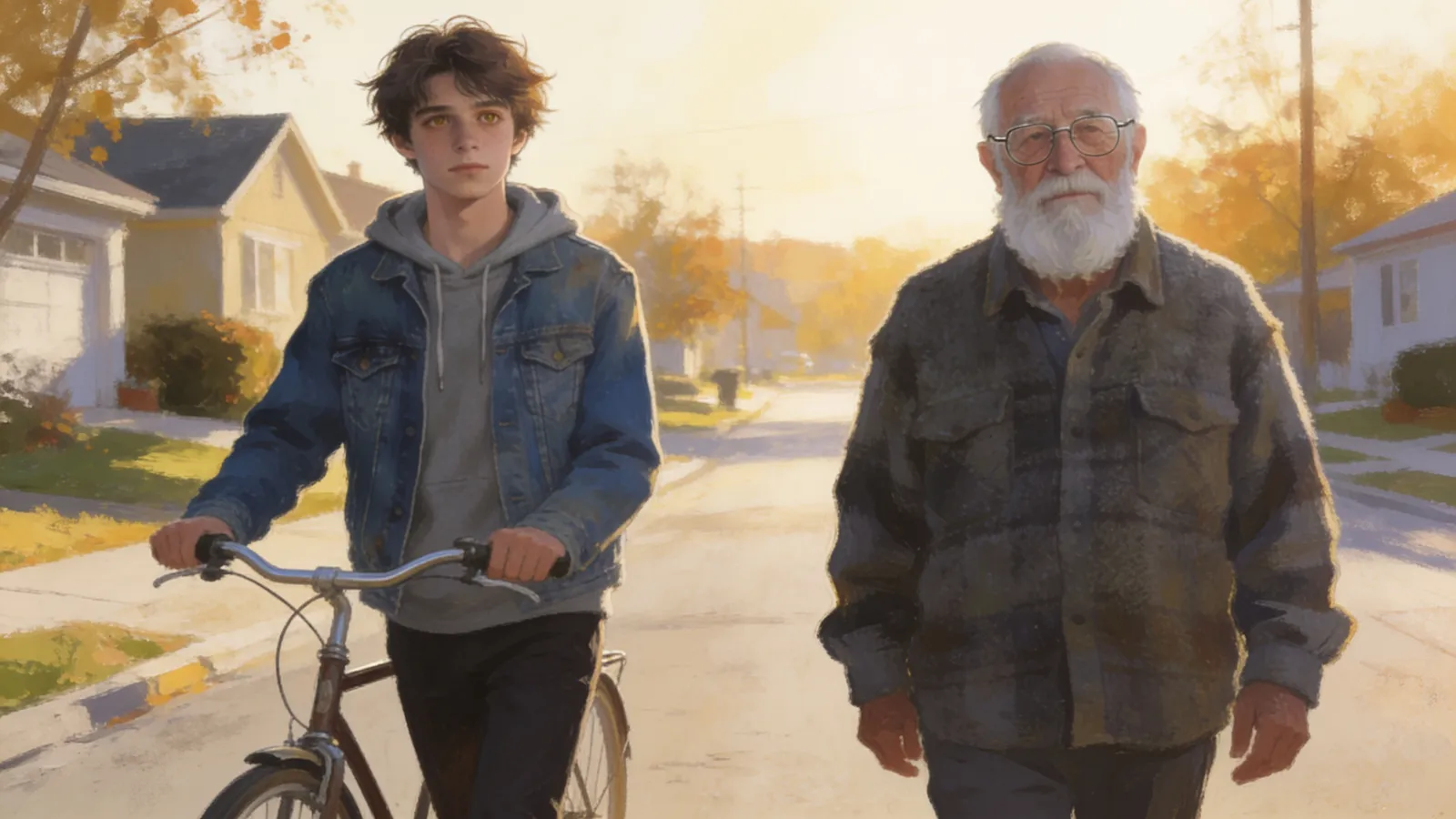
Silas found himself changing, too. He no longer wore his headphones when he rode. He listened to the birds, the wind, and the sound of his own breathing. He stopped avoiding eye contact. He realized that everyone he passed was carrying a box of unmailed letters in their heart, a hidden archive of things they wished they had said. He wasn't just a delivery boy; he was a catalyst, a small stone dropped into a still pond, creating ripples that refused to stop.
One afternoon, he found a group of kids playing ball in the street. Usually, he would have pedaled faster, head down, but today he slowed. The ball rolled toward his bike, and he hopped off to retrieve it. A young boy, no older than eight, ran up to him. "You're the guy with the letters!" the boy chirped. Silas smiled, a genuine, easy smile that felt new on his face. "I am. You want to help me with the next one?"
He let the boy walk beside him for a block, telling him stories about the vintage bike and how it used to belong to a master clockmaker. He realized that he was no longer the grandson of the neighborhood hermit. He was Silas, a person with his own voice, his own story. The walls his grandfather had warned him about were crumbling, and in their place, he was finding a world that was far more beautiful, and far less frightening, than he had ever imagined.
There was only one letter left. It was the one Silas had been avoiding, the one addressed to his own father, Arthur's estranged son. His father lived three towns away, a distance that felt like a thousand miles given the years of silence between them. The letter was sealed with red wax, a sign of its importance. Silas knew that this was the final bridge, the one that would either complete his journey or leave him stranded.

He didn't use the bike for this one. He took the bus, the satchel heavy on his lap. He watched the landscape change from the familiar streets of Echo Ridge to the industrial outskirts of the city. His father, David, worked in a sterile office building, a place of glass and steel that felt the opposite of Arthur's wood-filled attic. Silas felt a surge of nerves as he entered the lobby, his denim jacket and messy hair out of place among the suits.
When David saw Silas in the doorway of his office, his face went pale. "Silas? Is something wrong? Is your mother okay?" Silas shook his head and walked toward the desk, placing the letter on the polished mahogany surface. "Grandpa left this for you. I've been delivering them all week. To everyone."
David looked at the letter, his jaw tightening. "He had a lot to apologize for," he said, his voice cold. Silas didn't back down. "I know. But he did it. He wrote it all down. He just couldn't find the way to give it to you." He watched as his father's hand reached out, hovering over the wax seal. For a moment, the two of them were frozen in the quiet office, the hum of the air conditioning the only sound. Then, David broke the seal. Silas watched his father's face soften, the lines of resentment melting away as he read his father's final words. "He says he was wrong about the clocks," David whispered, a small, sad laugh escaping him. "He says I was the only thing he ever built that was perfect."
The return to Echo Ridge felt like coming home for the first time. Silas walked from the bus stop, the empty satchel swinging at his side. The sun was setting, casting long, purple shadows across the neighborhood. As he turned onto his street, he saw something that stopped him in his tracks. There were people on his lawn. Not just a few, but a dozen or more.
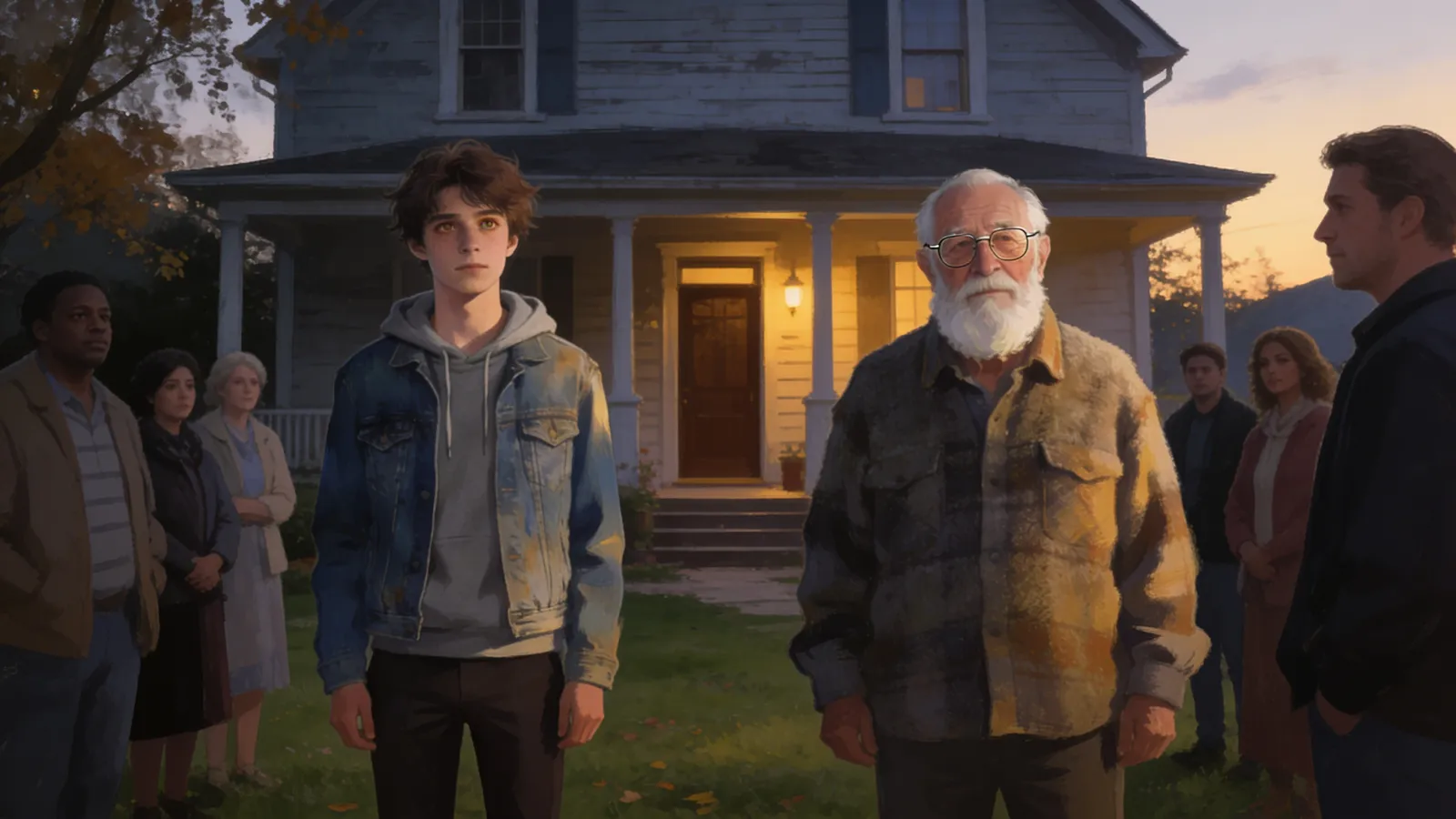
Mrs. Gable was there, holding a plate of sandwiches. Mr. Henderson was talking to Mr. Miller by the porch steps. Elena was sitting on the grass, her sketchbook open. They had come together, brought by the letters, to the house they had all avoided for so long. Silas felt a surge of emotion so strong it took his breath away. They weren't there for Arthur; they were there for him.
"We thought the place looked a little lonely," Mr. Henderson called out, waving a wrench like a baton. "Thought we'd help you clear out some of those old weeds." Silas walked into the middle of the group, his heart full. He saw his father's car pull into the driveway, David stepping out with a hesitant smile. The two men, father and son, looked at each other, and for the first time in years, the silence wasn't a wall. It was a beginning.
They spent the evening working together, the sound of laughter and conversation filling the air where only the ticking of clocks had been. They shared stories of Arthur, the good and the bad, weaving a new history for the man who had died in isolation. Silas realized that his grandfather's final act of kindness wasn't just the letters themselves, but the legacy of connection they created. He had left Silas a neighborhood, a family, and a way to belong.
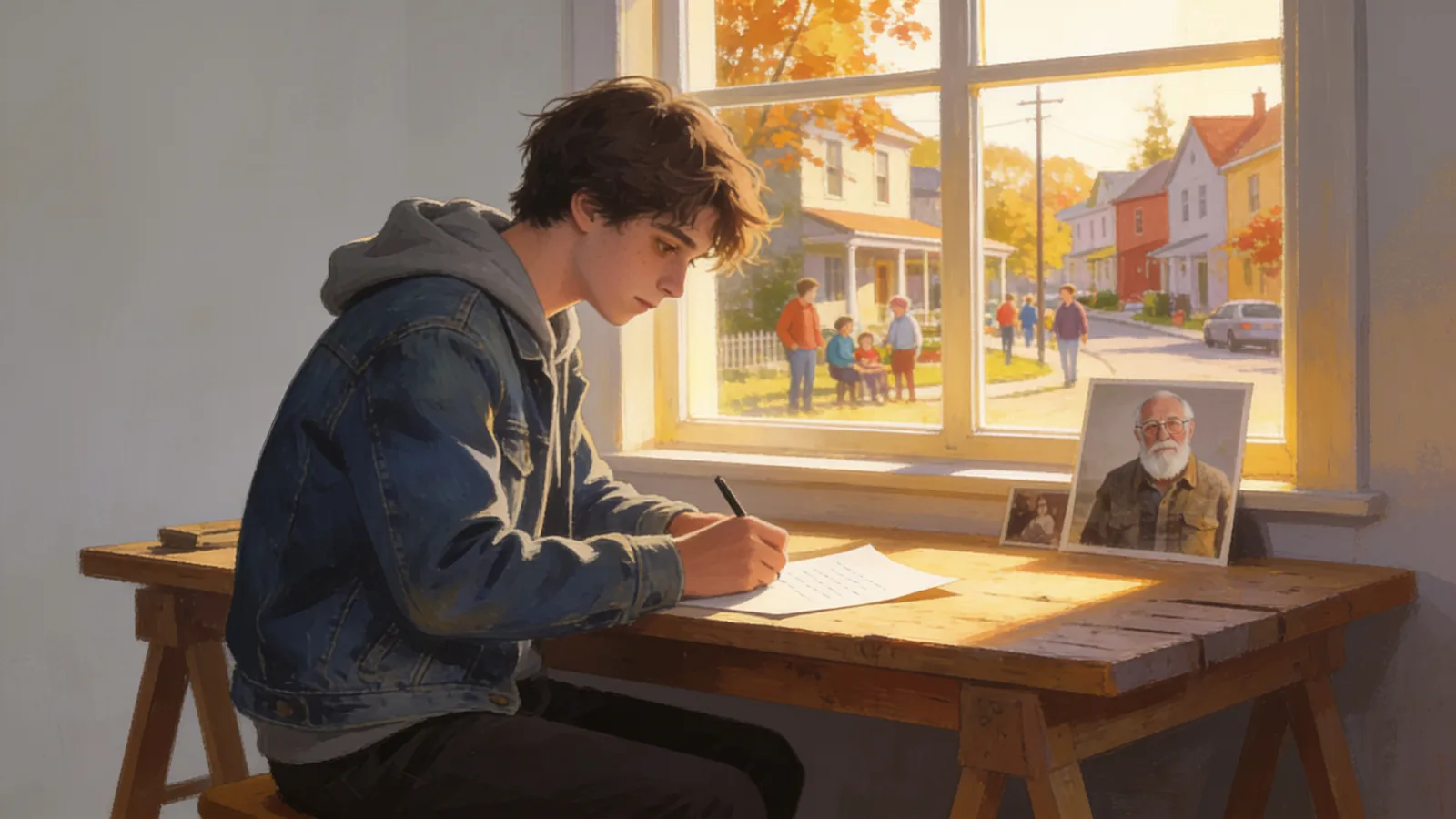
A month later, the house on the ridge was no longer a tomb. The windows were open, letting in the scent of blooming jasmine and the sounds of the street. Silas sat at his grandfather's old workbench, the tools cleaned and organized. He wasn't fixing clocks, though he had learned a few things about gears and springs. He was writing. He had a new box now, one made of light pine, and it wasn't for apologies. It was for the things he wanted to say while people were still there to hear them.
He looked out the window and saw Mrs. Gable walking her dog, pausing to chat with Elena. He saw the Miller boys playing catch in the street. The neighborhood had changed, the invisible lines of tension replaced by visible threads of friendship. Silas picked up a pen, his hand steady. He thought about the letter his grandfather had left for him, the one about tearing down the walls before the mortar set.
"Dear Grandpa," he wrote, the ink flowing smoothly on the page. "The walls are gone. I found the courage, just like you wanted. But I didn't do it alone. You were there in every word, every apology, every bridge we crossed. Thank you for leaving me the map." He folded the paper and placed it in the box. He didn't need to mail it. He knew the message had already been delivered.
He stood up, grabbed his denim jacket, and headed for the door. Outside, the world was waiting, vibrant and loud and beautiful. He hopped on his vintage bike, the chrome gleaming in the morning sun, and pedaled down the driveway. He didn't look back. He was moving forward, a young man no longer defined by his solitude, but by the connections he had the courage to build. The postman of Echo Ridge had finished his route, and a new story was just beginning.


